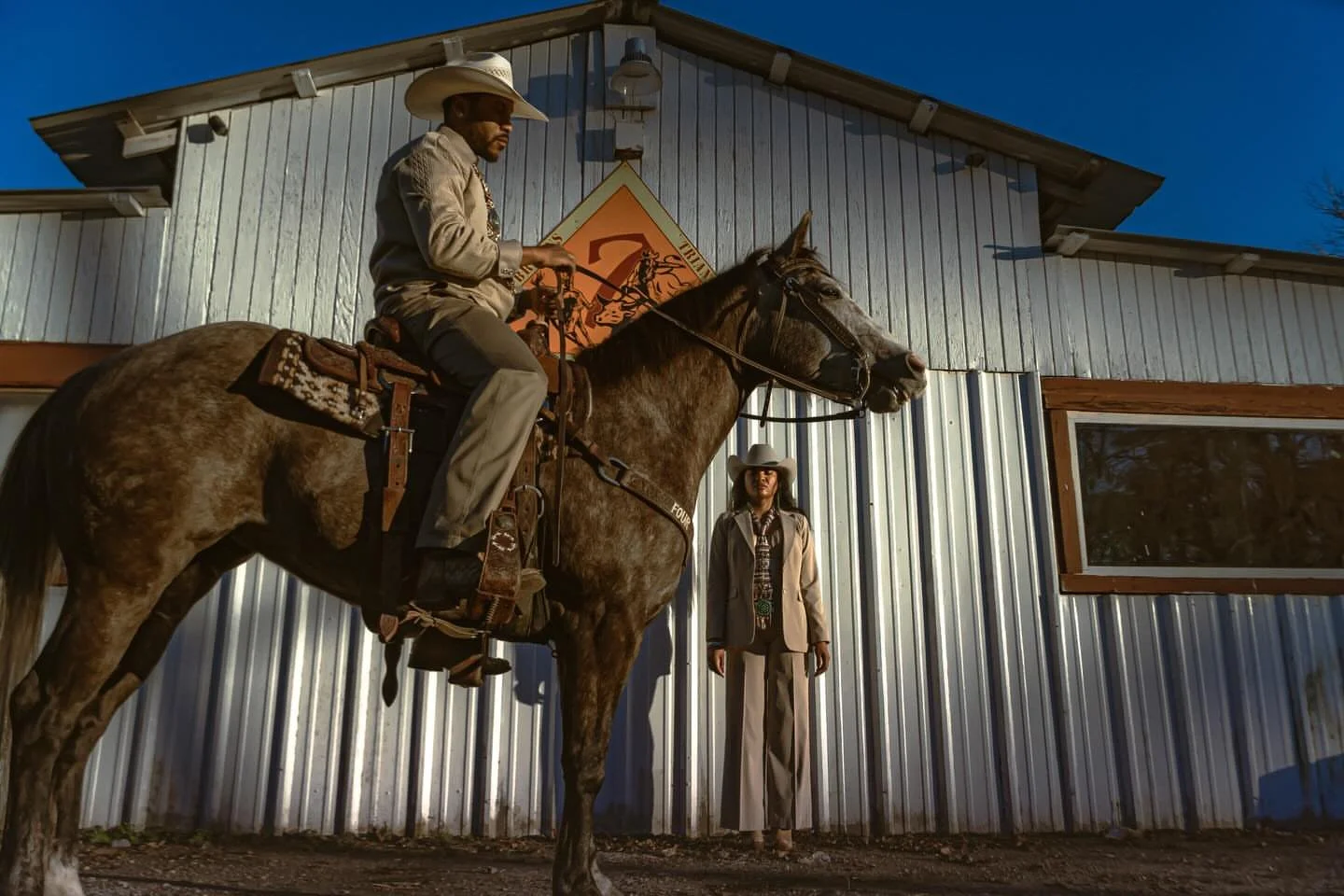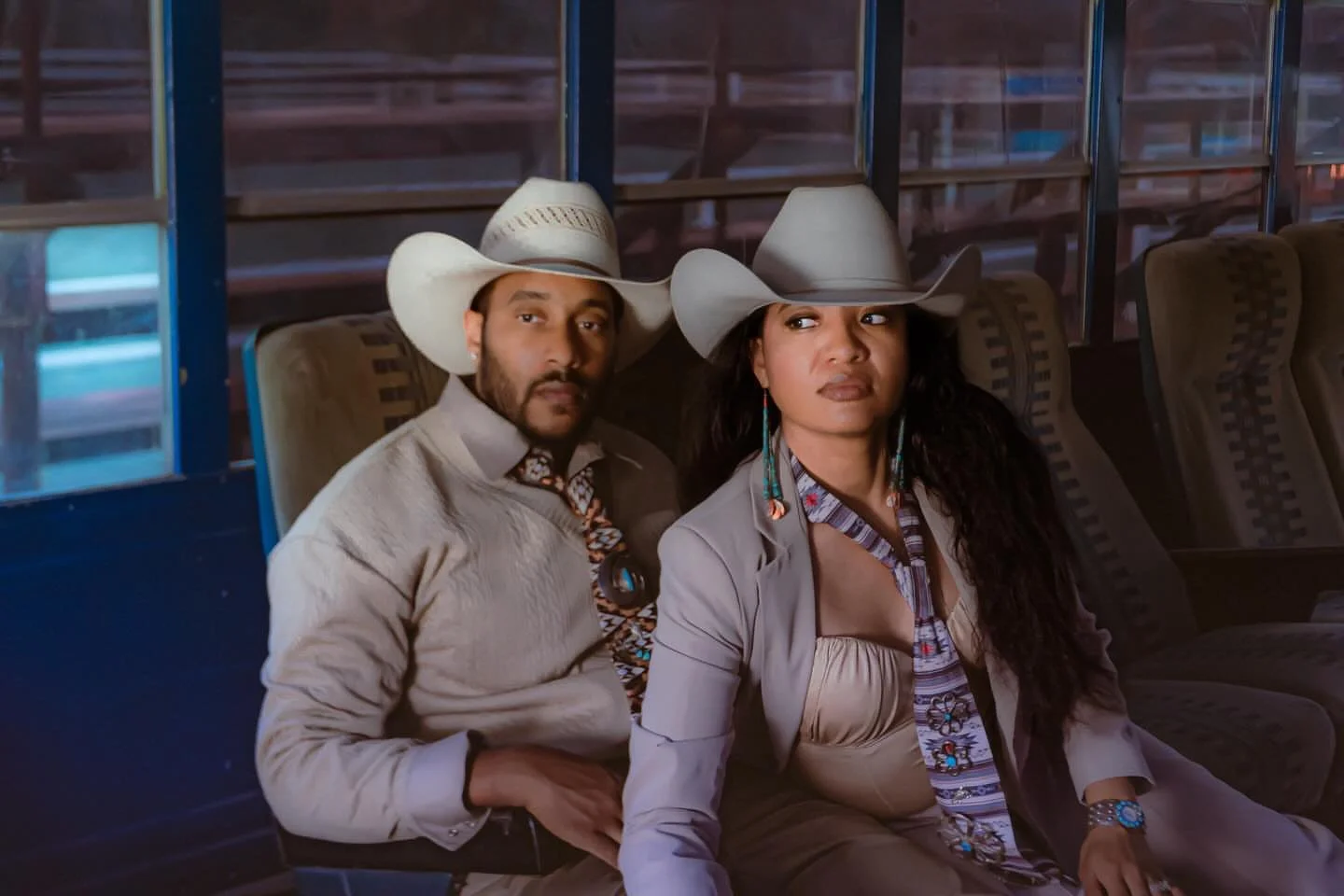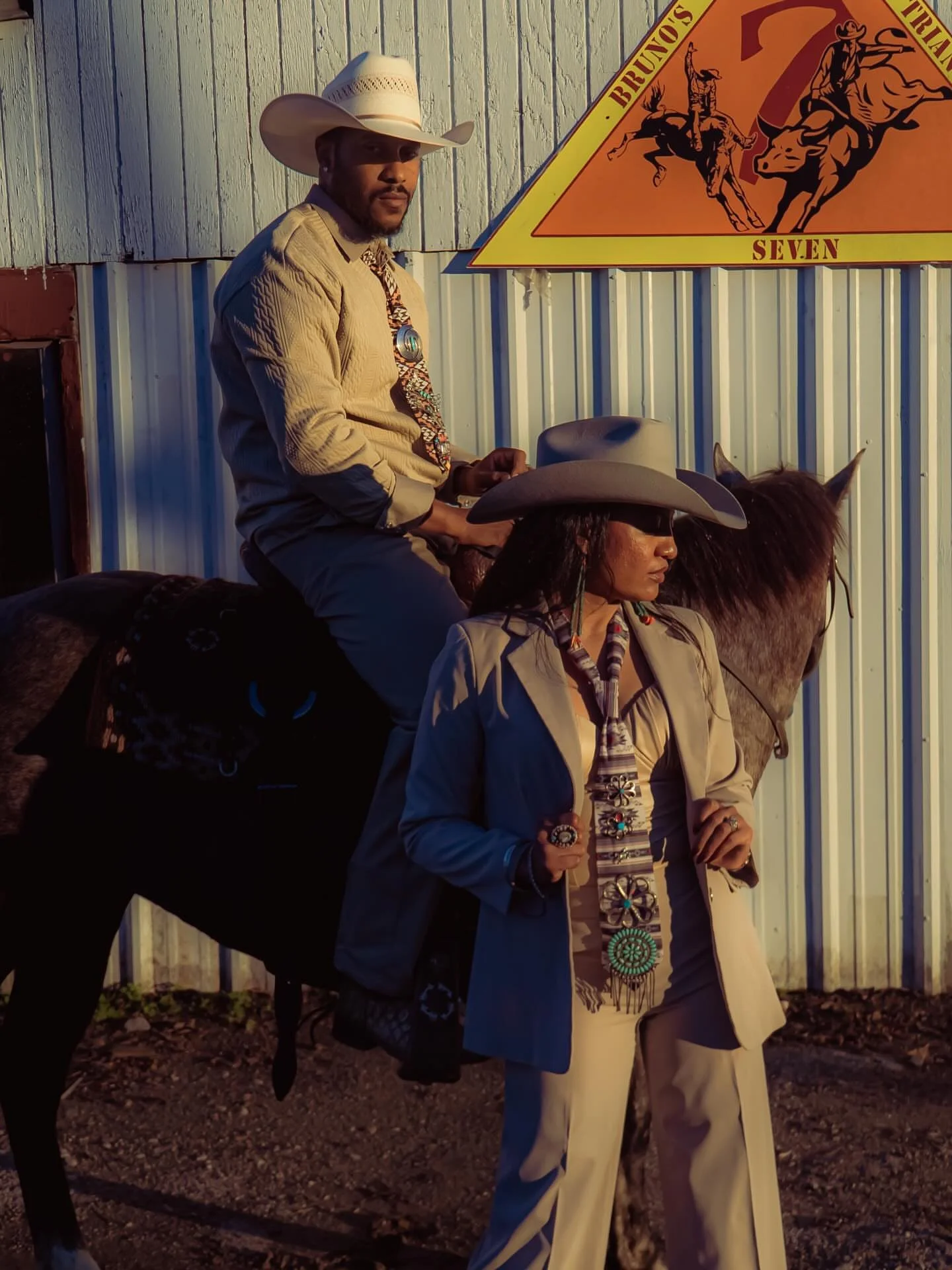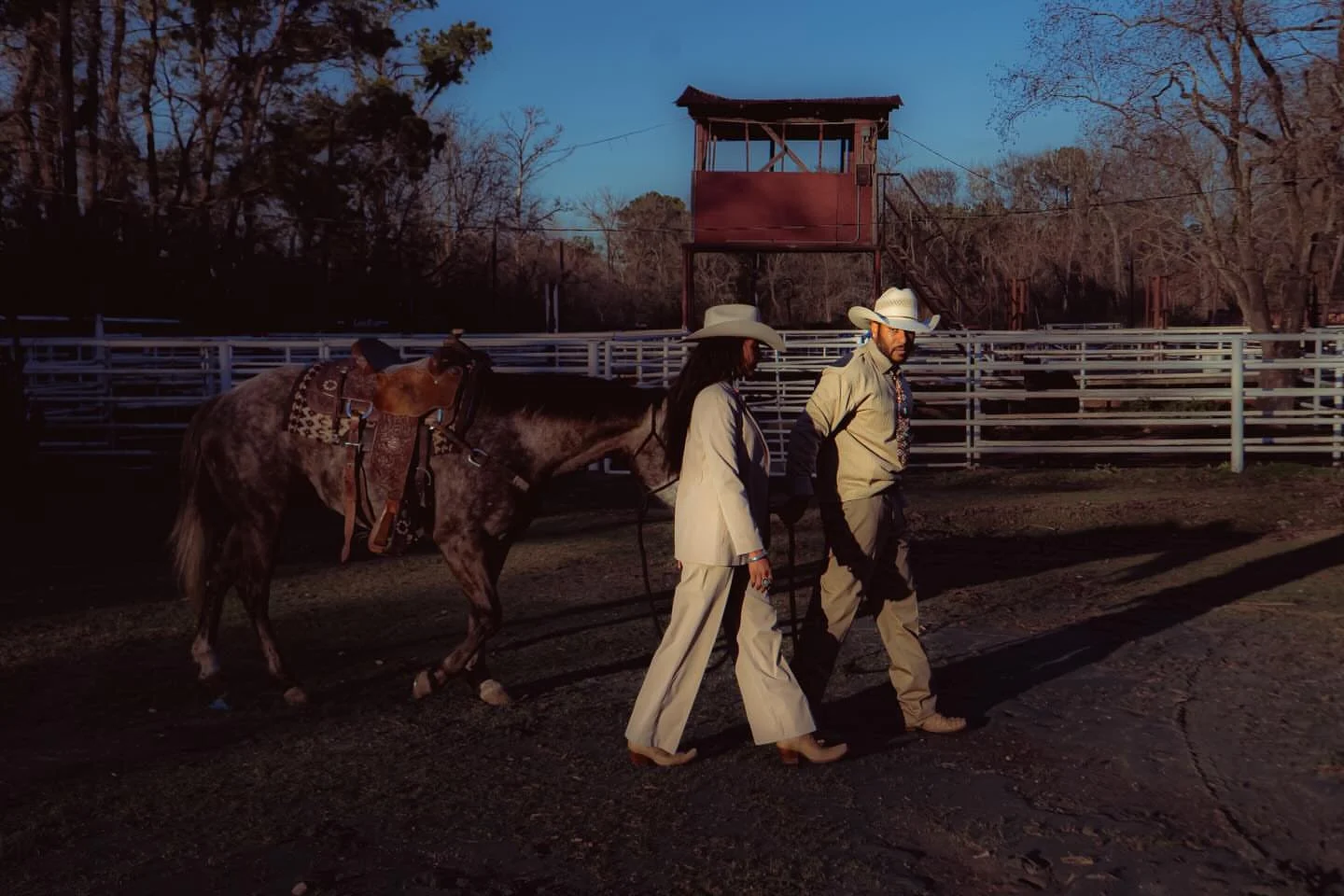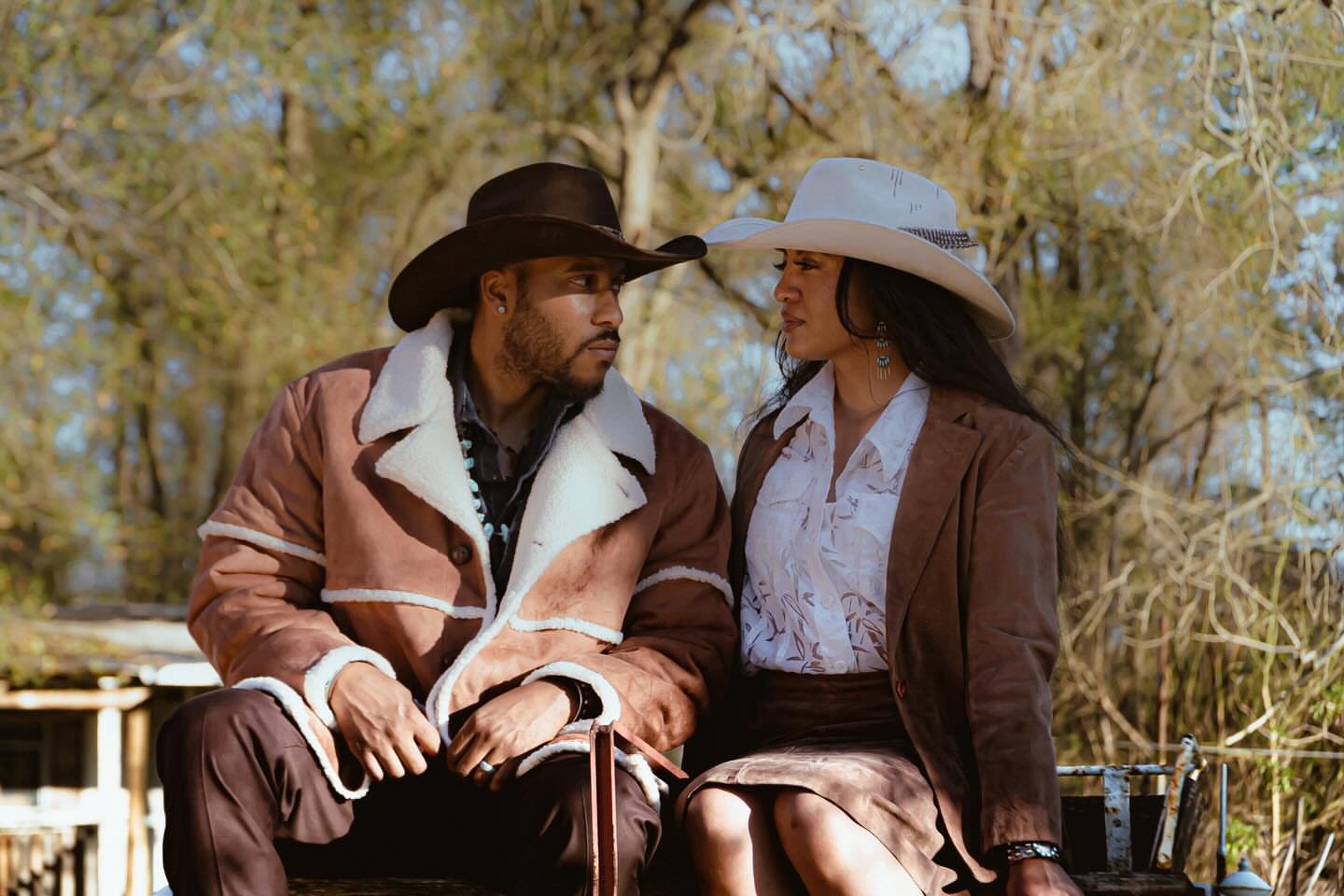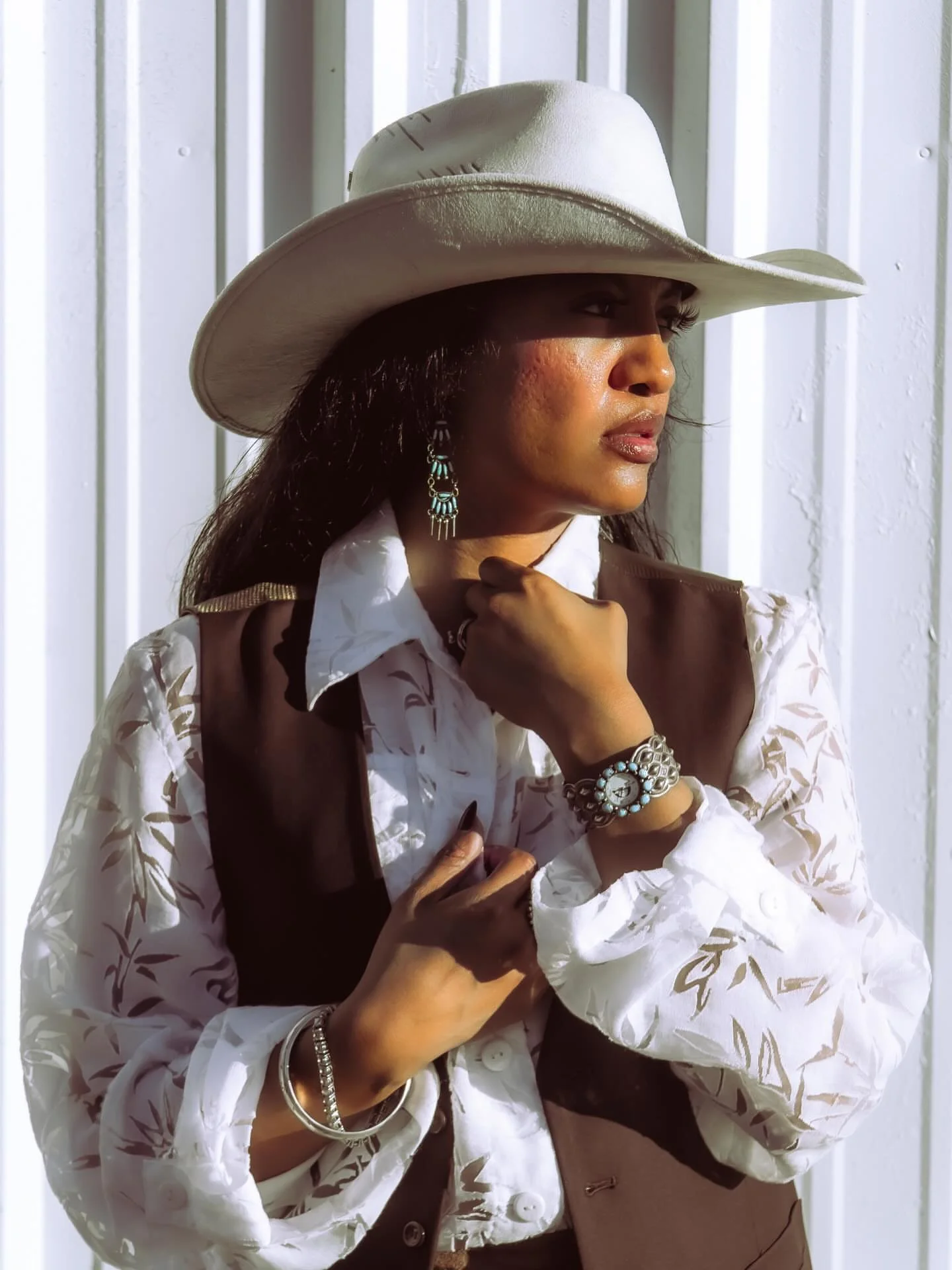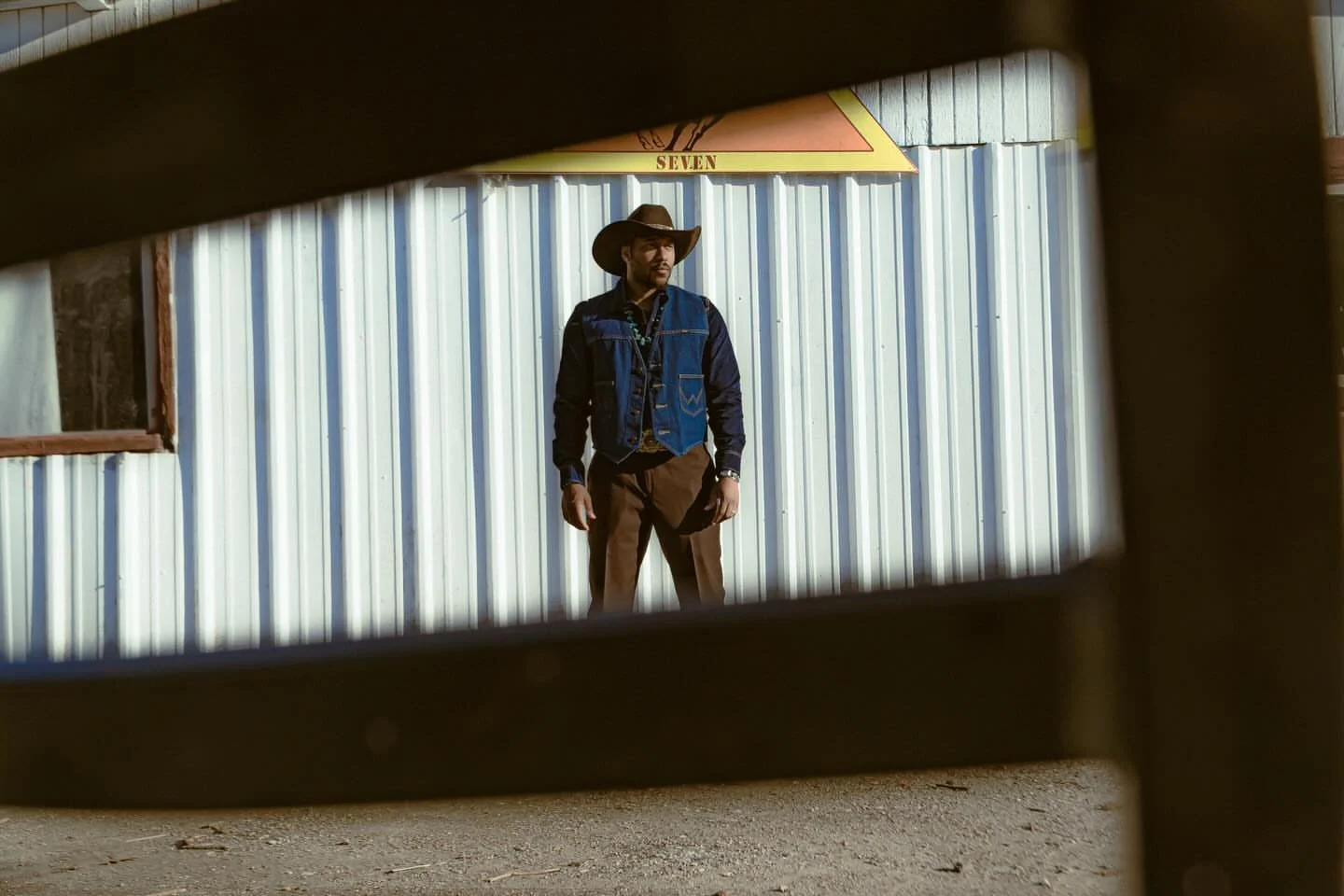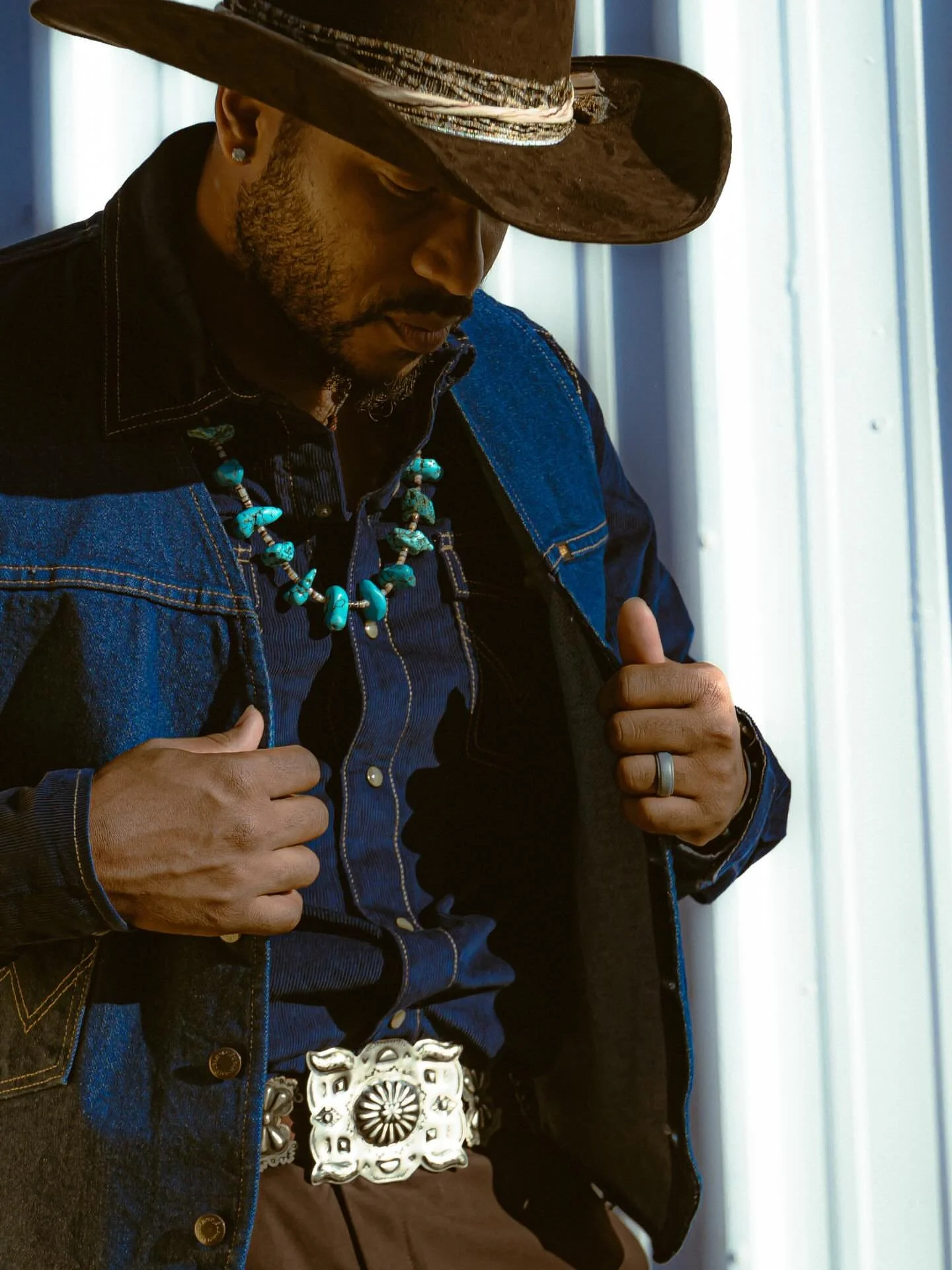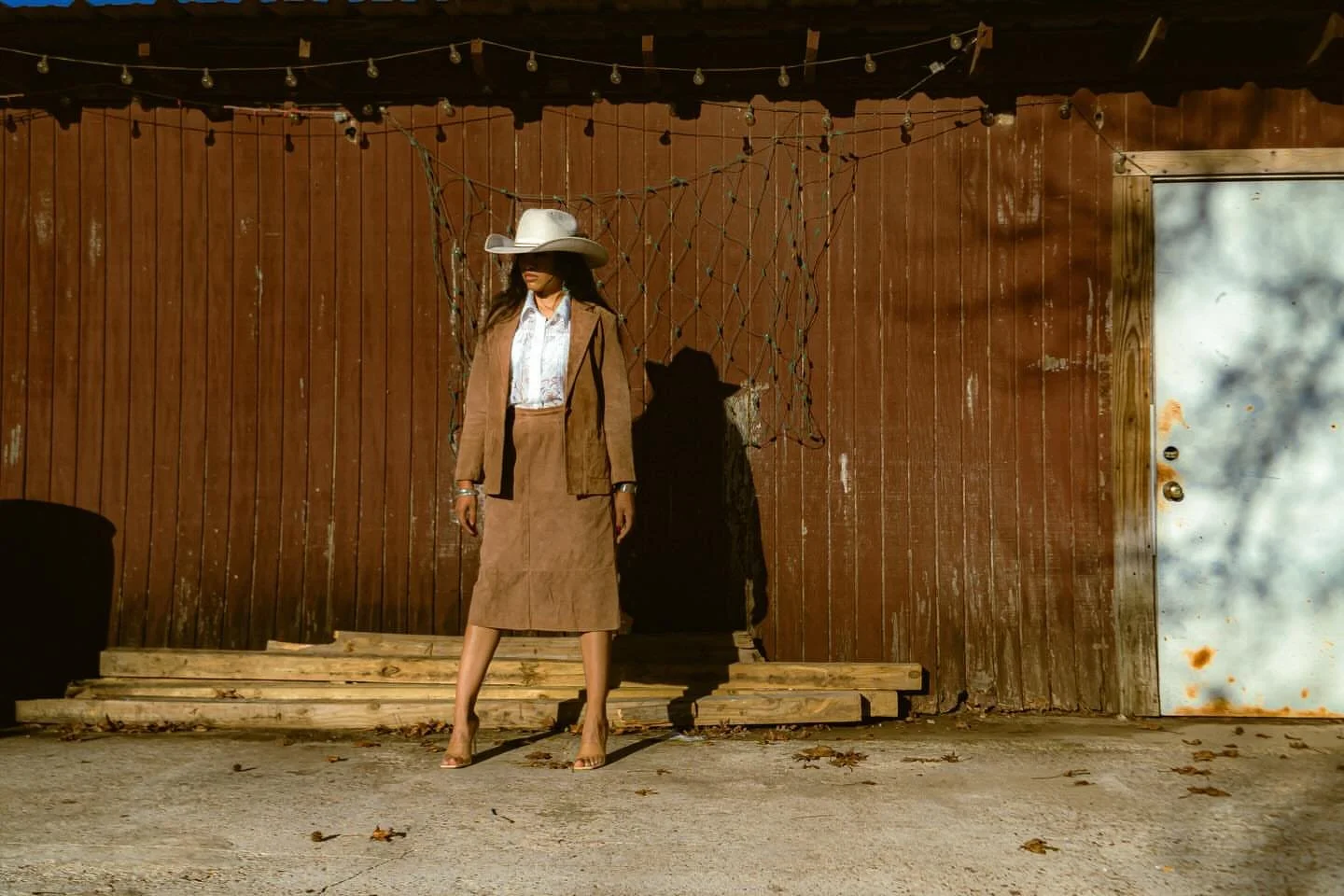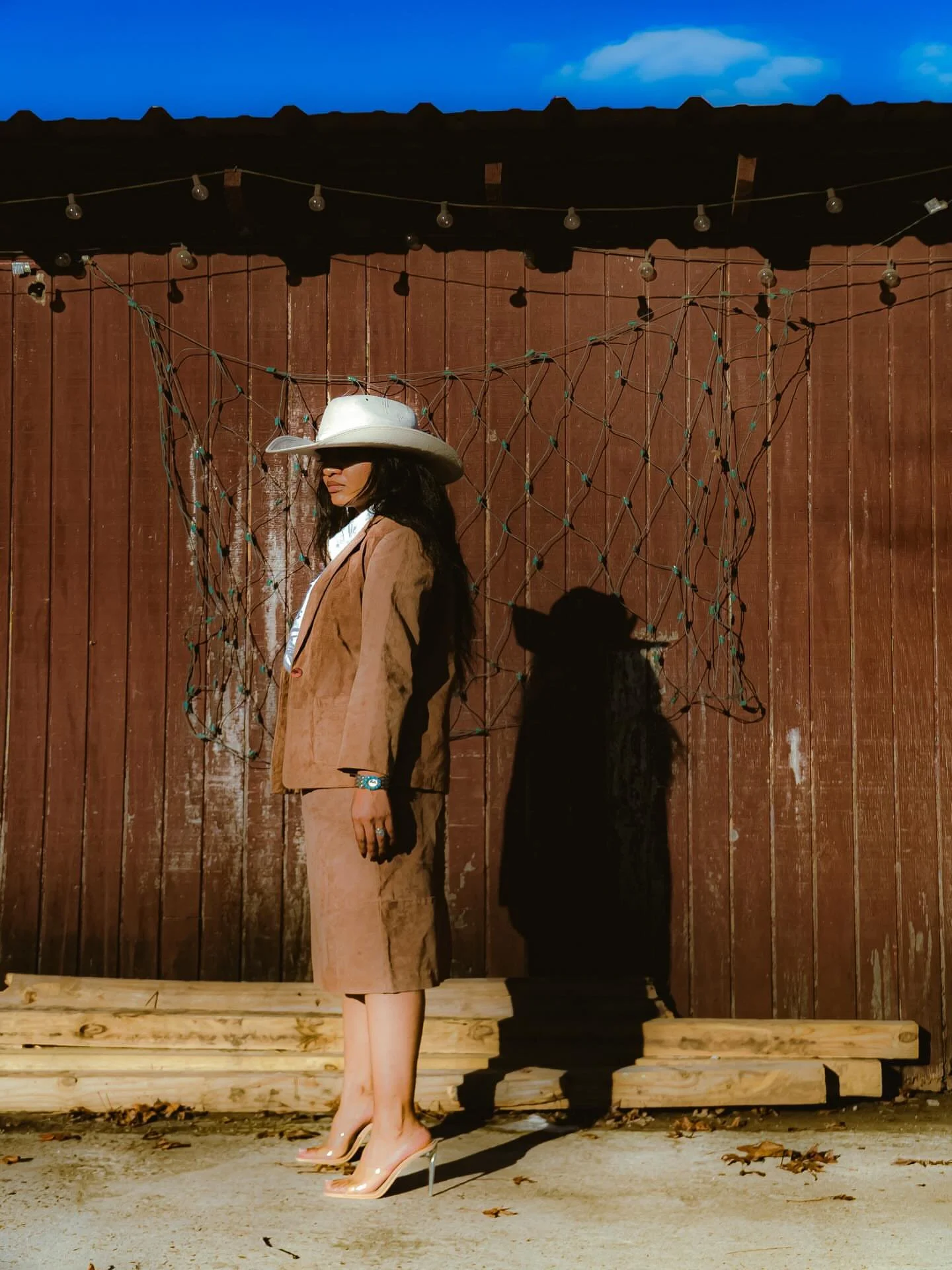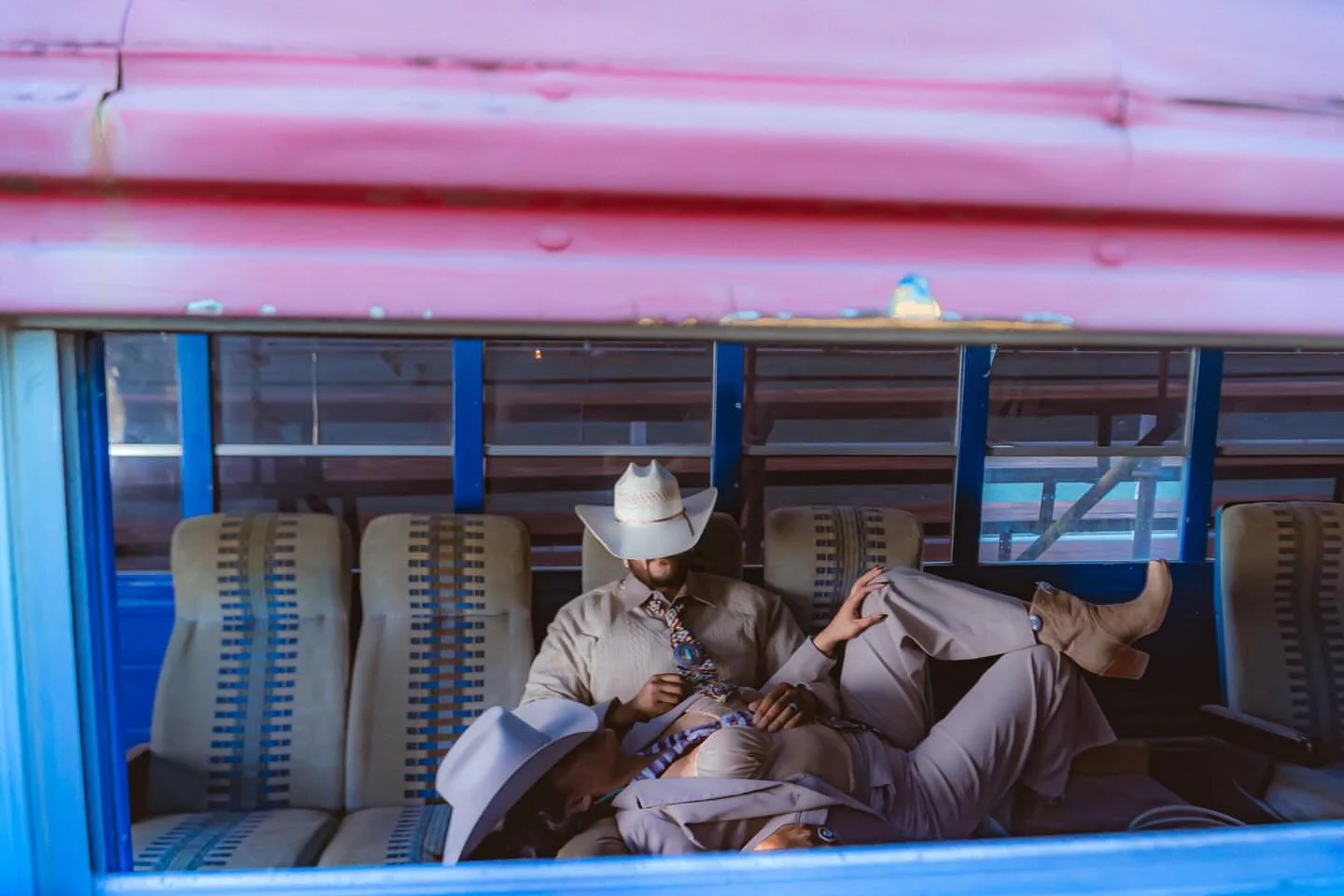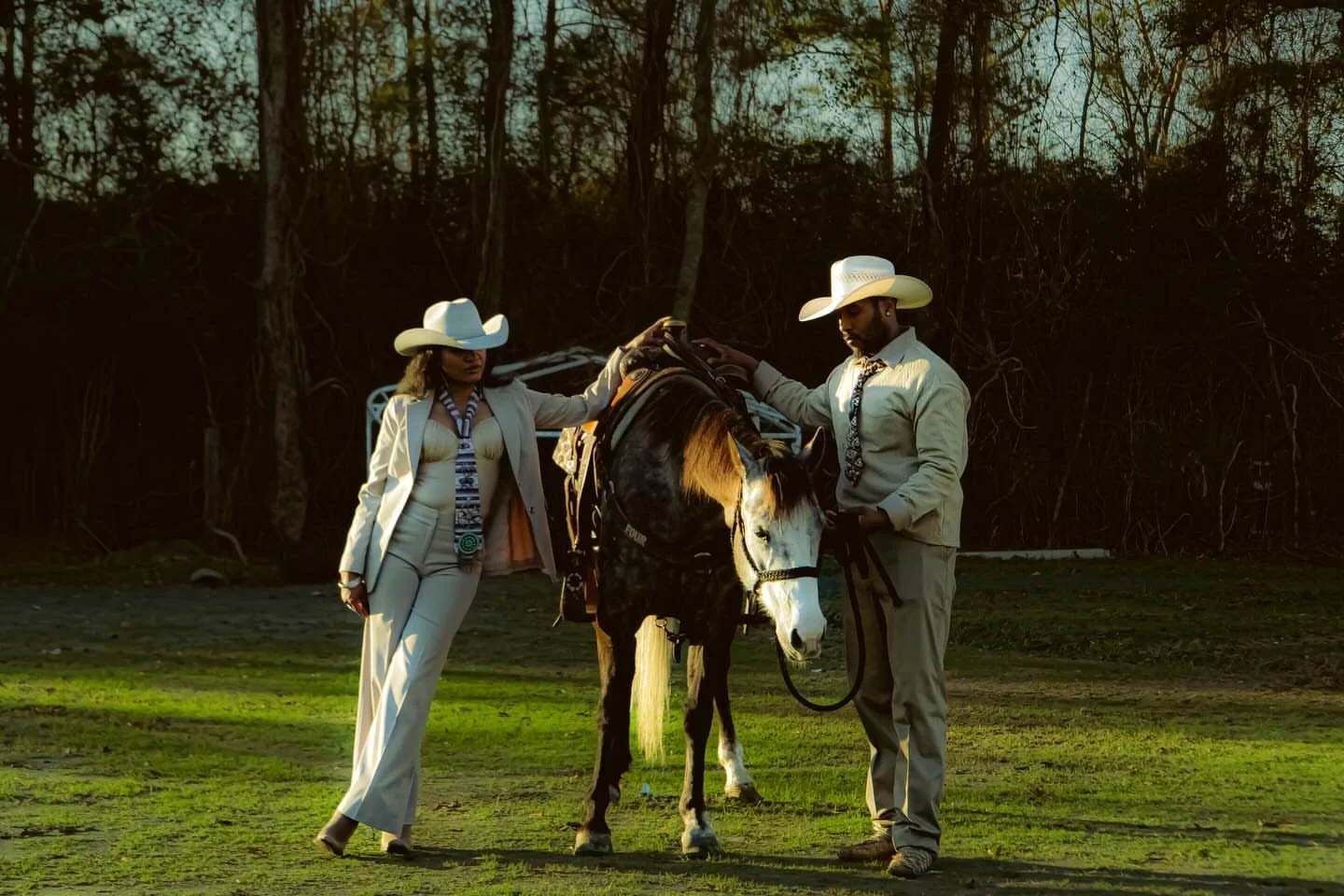
Months before our first Vogue shoot, a March 2026 editorial quietly introduced the visual language that would follow Western heritage, tailored fashion and a legendary arena transformed through a different lens.
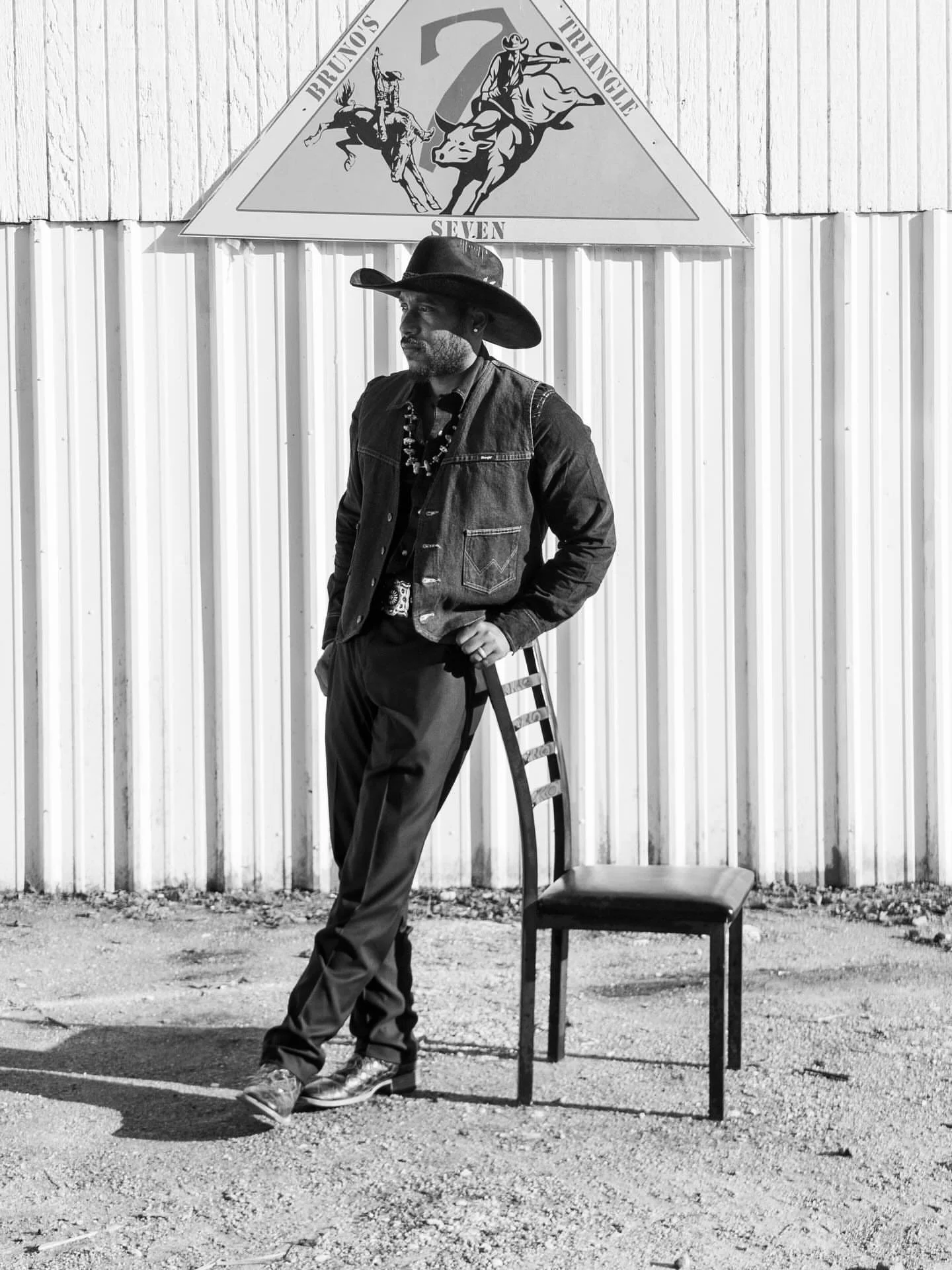
In March 2026, we entered the arena with an idea that felt both unexpected and completely natural: boardroom meets high-fashion Western.
The intention was never to separate Western clothing from its roots. It was to explore how those roots could travel how pieces associated with competition, labor and arena life could take on new meaning through styling, composition and perspective.
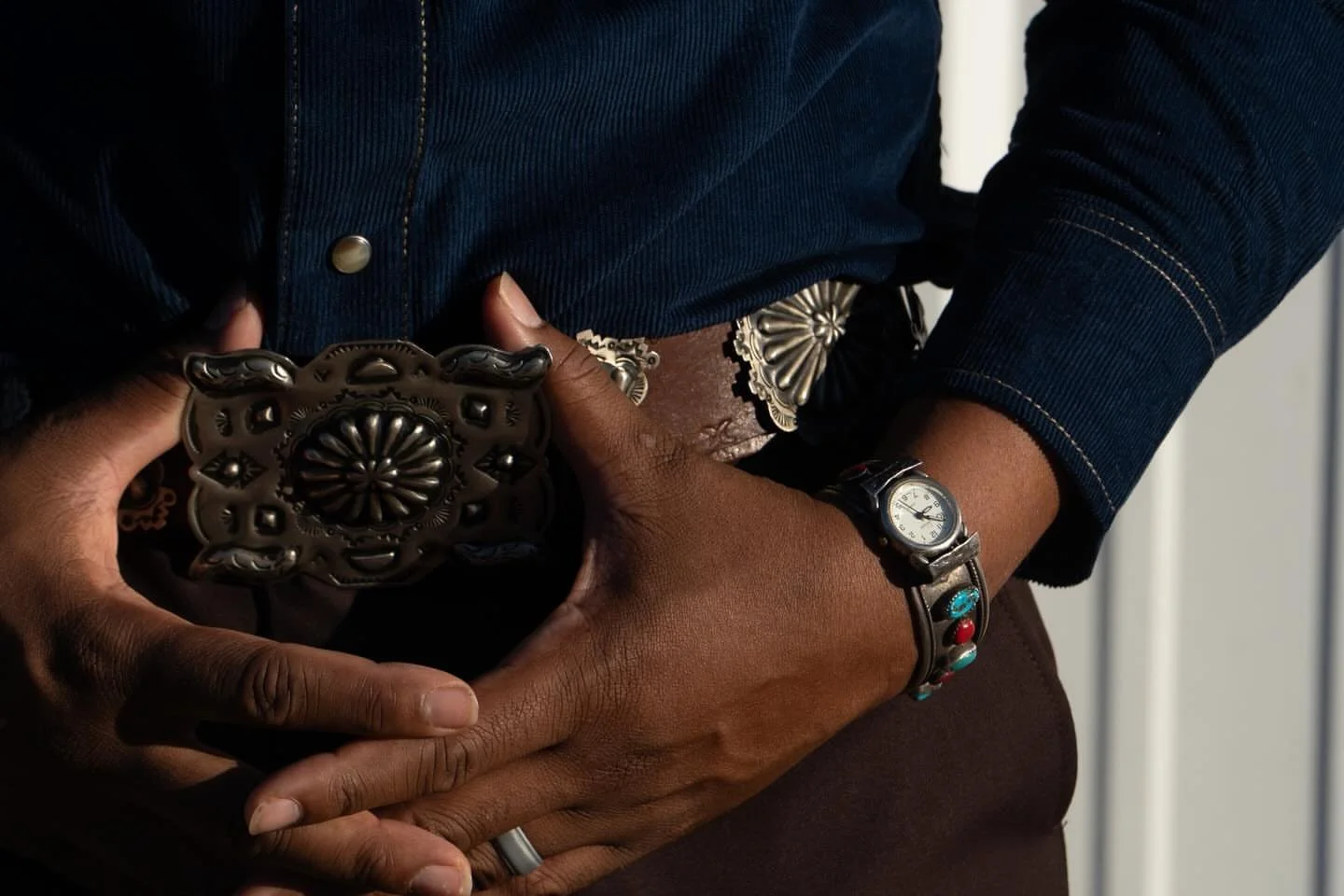
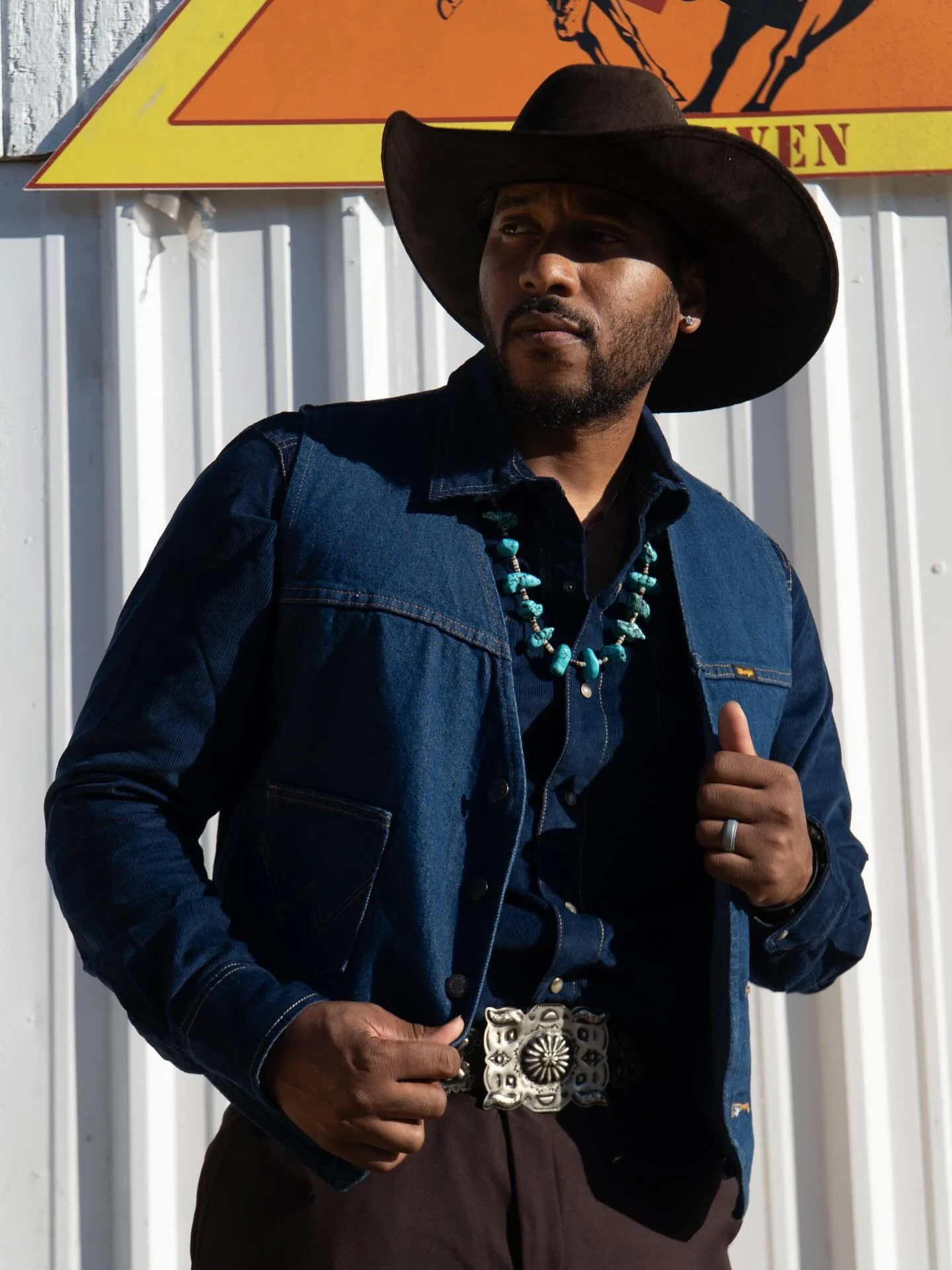
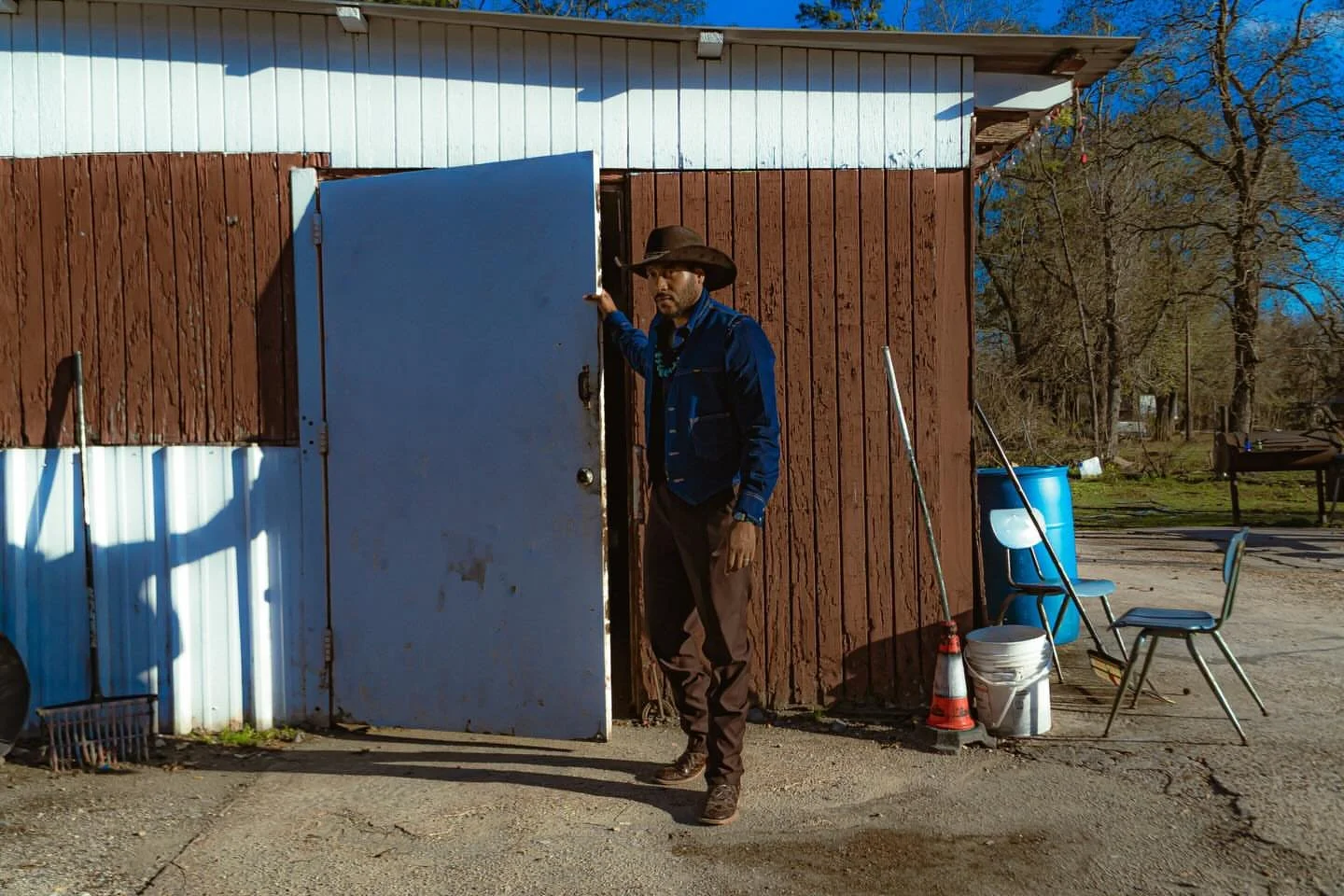
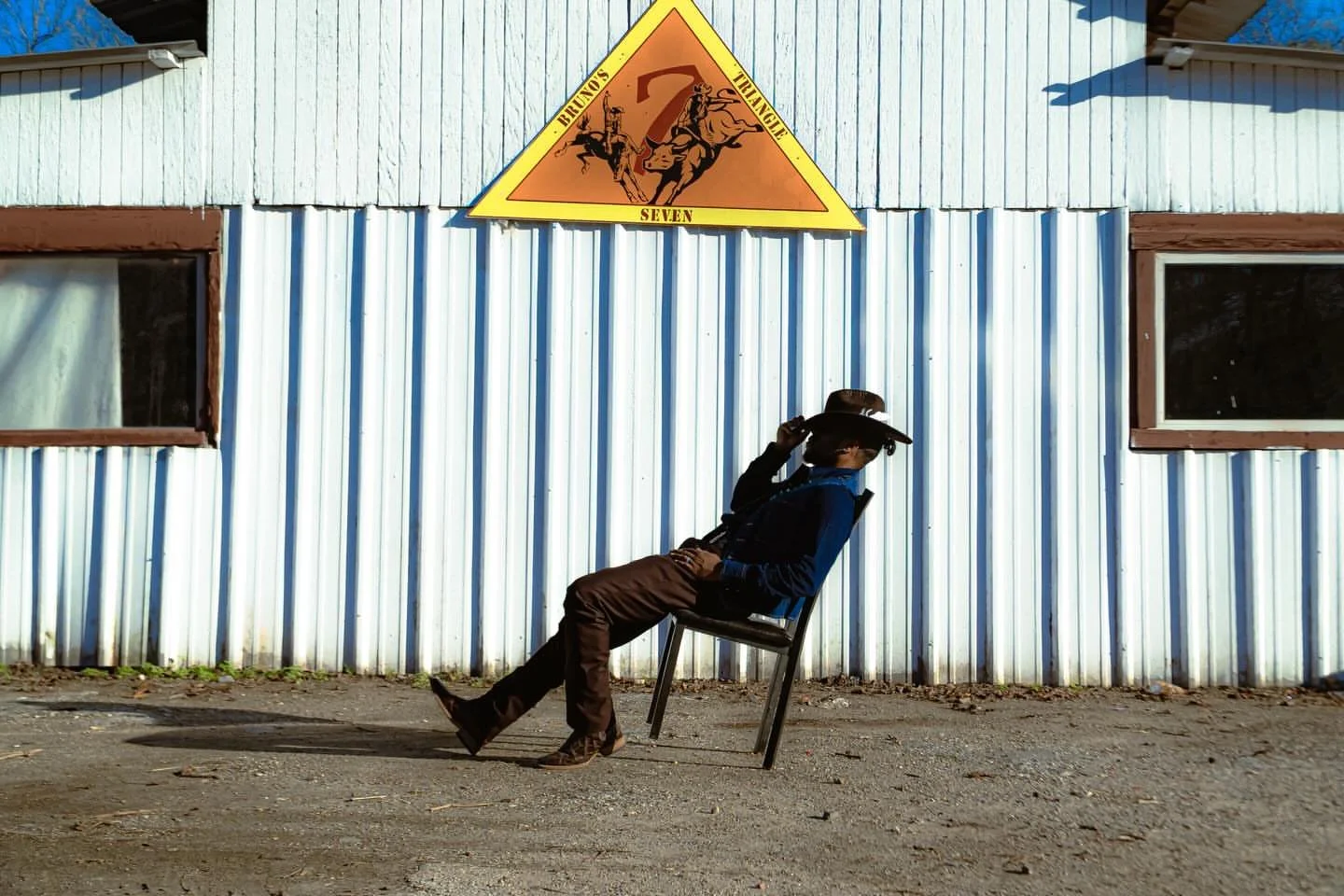
Dennis Chachere wore Wrangler pieces, but they were presented beyond their traditional context. Against the arena backdrop, familiar Western garments became an exercise in proportion, confidence and modern masculinity. The clothes still belonged to the culture; we were simply asking the viewer to see them differently.
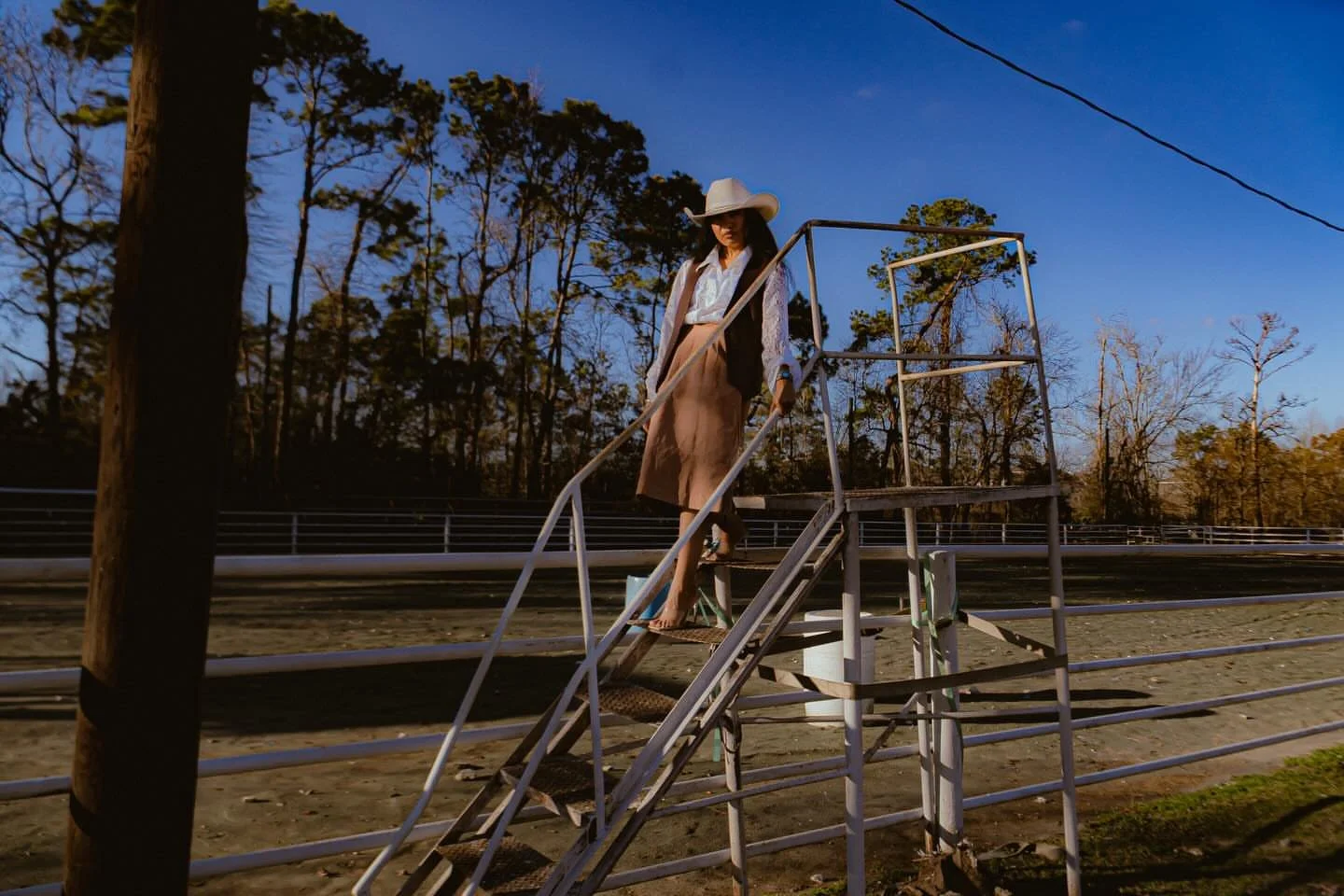
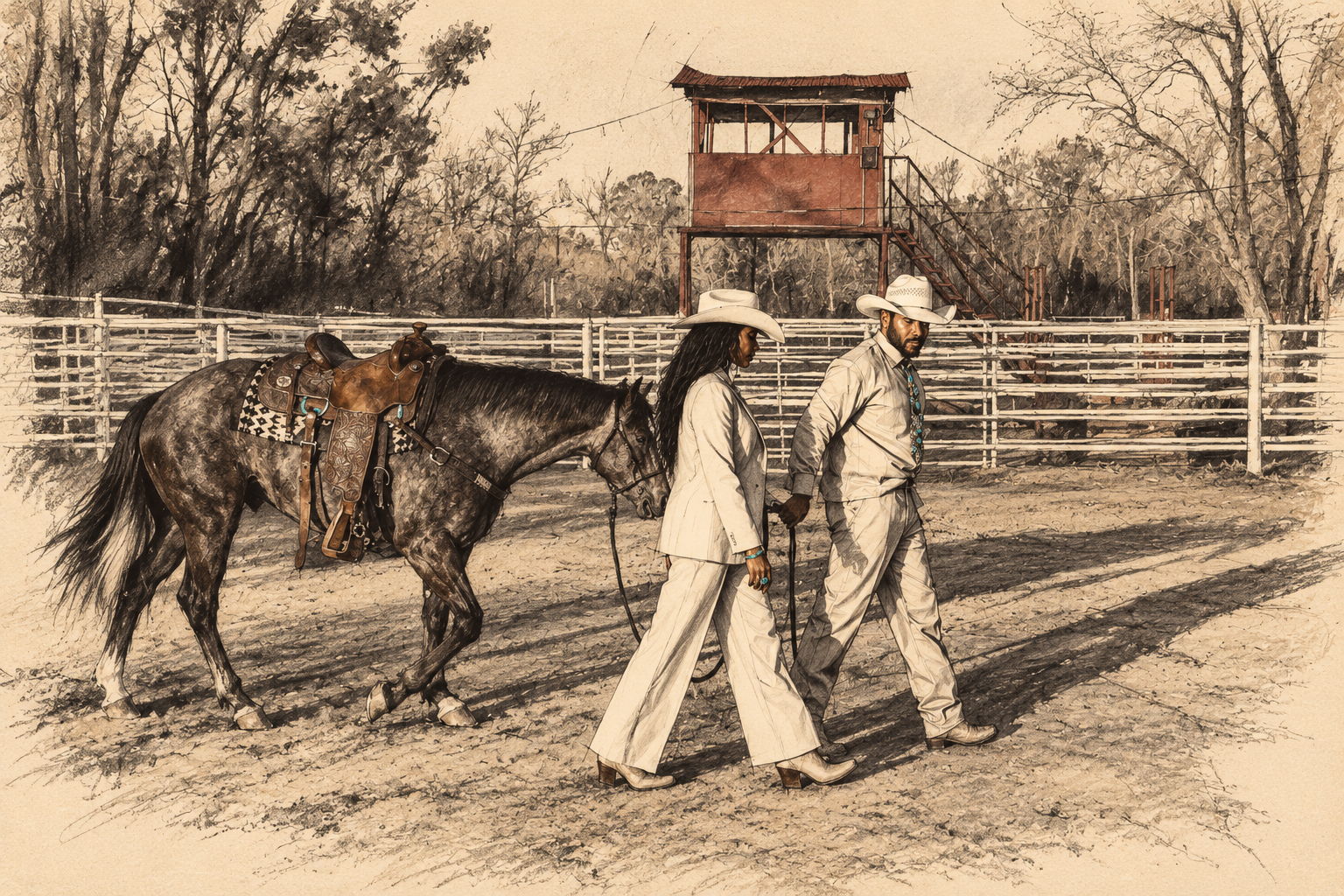
My wardrobe approached the story from another direction. Vintage womenswear brought softness and structure into the visual conversation, while tailored silhouettes carried the authority of the boardroom. A vest borrowed from my husband became part of that language, showing how a garment can move between masculine and feminine expression without losing its identity.
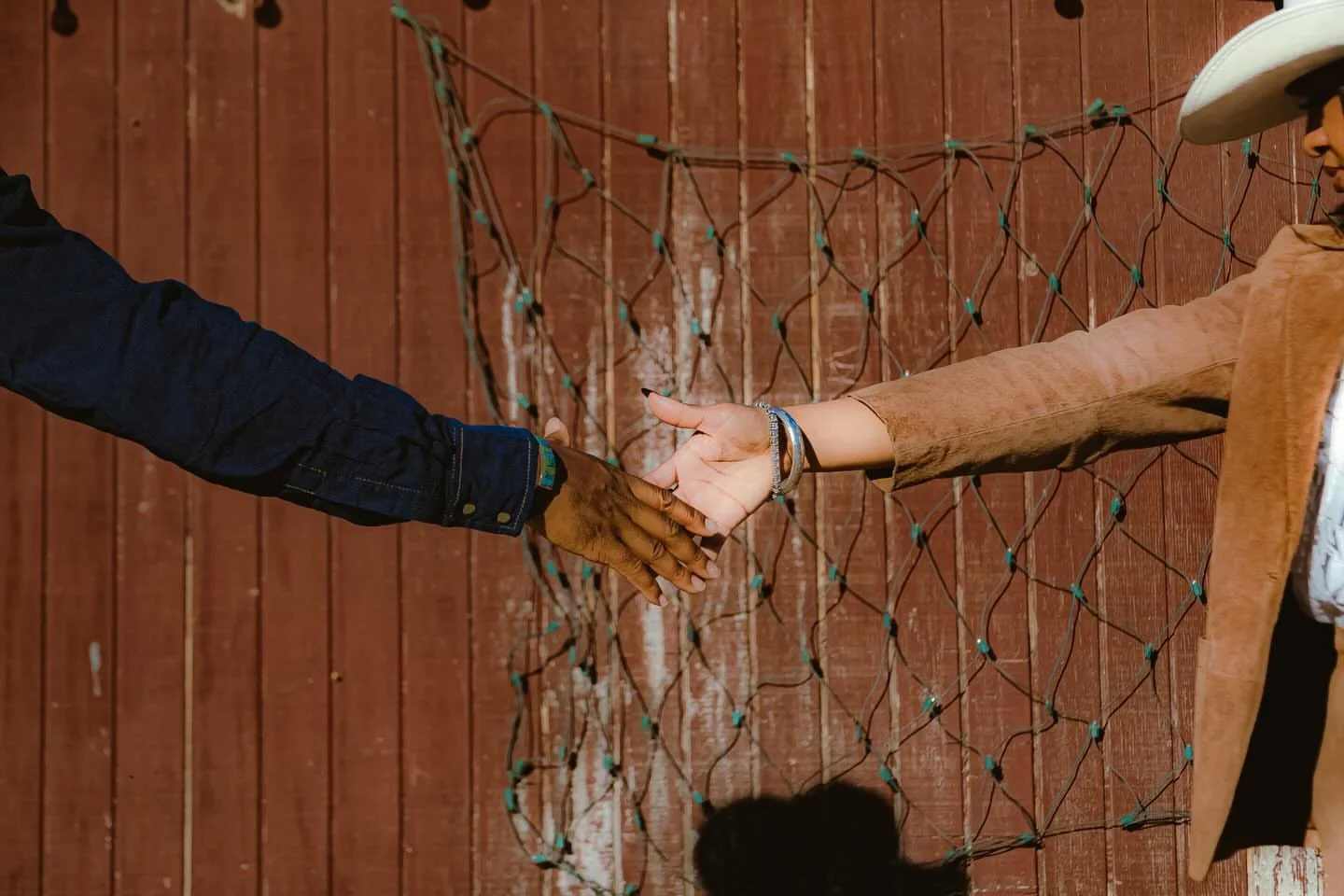
The jewelry carried an even deeper significance. These were not accessories selected only to complete a look they were family heirlooms. Each piece brought memory, lineage and personal history into the frame. In Western fashion, adornment often communicates more than taste. It can hold generations.
Styled by LaBelle LaFrance, the wardrobe created a balance between heritage and experimentation. Menswear, vintage womenswear and inherited jewelry were not treated as separate ideas. Together, they formed one story about the way Western identity is carried, shared and reinterpreted.
The shoot began as a deck a visual concept built around the arena, the wardrobe and the meeting of two worlds. Houston photographer Dennis Sullivan reviewed that deck, understood what we were trying to create and helped transform the vision into reality. His photography captured more than the clothing. It captured the tension between strength and softness, tradition and progression, arena grit and editorial polish.
At the time, we saw the shoot as an opportunity to express our point of view. We did not know it was also foreshadowing what would come next.
A few months later, the same legendary arena appeared in the pages of Vogue’s Summer 2026 edition as the setting for our first Vogue shoot.
Looking back, the connection feels almost cinematic. Before the Vogue pages, before the larger platform and before we understood where the story was leading, we had already begun developing the visual language: Western culture presented with intention, fashion shaped by lived experience and an arena treated not merely as a location, but as a stage.
The March shoot now holds a different place in our history. It reminds us that creative direction often begins as instinct. You follow what feels honest before you know where it may lead.
Sometimes the future does not arrive with an announcement.
Sometimes it appears quietly in a borrowed vest, an heirloom piece of jewelry, a photographer who understands the vision and an arena waiting to become a runway.
Creative Direction: Ahsaki Chachere
Featuring: Ahsaki and Dennis Chachere
Styling: LaBelle LaFrance
Photography: Dennis Sullivan